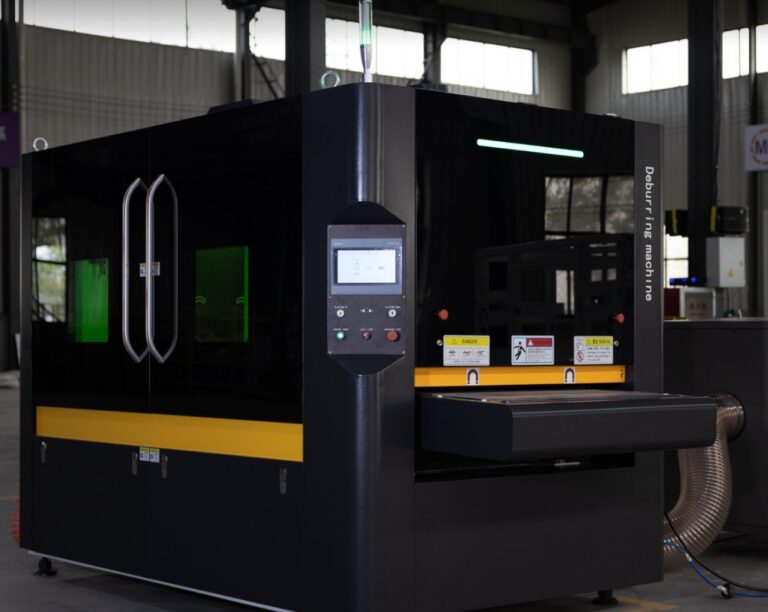
Beginning our extensive overview pertaining to computerized machines produced specialized in removing burrs represent modernized production routines, providing remarkable advancements towards velocity and quality. This analysis details the several types of machines, made up of media abrading devices, turning machines, and innovative CNC technologies. We will cover the merits of leveraging these advancements, consisting of decreased labor costs, enhanced product uniformity, and amplified overall productivity.
Border Polishing Machines: Meticulous Perfecting Explained
Profile filleting units offer a advanced solution for obtaining spot-on finalizing on parts. In contrast with manual means, these automated machines offer reliable products and significantly enhance assembly capability. Such mechanisms typically utilize diverse wearing mechanisms like twisting tips, polishing drums, or unique contours to get rid of sharp borders and spurs. These kinds of technique is crucial in a broad spectrum of applications, like healthcare and technology.- Upgrade face grade
- Curtail creation outlays
- Raise productivity and competence
Waste Clearing Equipment: Securing Clean, Exceptional Exteriors
Present-day metal fabrication techniques consistently produce significant amounts of byproducts, a byproduct that, if neglected, can severely harm the finish of the final product. Fortunately, advanced slag removal machines offer a proven solution. These purpose-built machines, employing techniques like blasting, are designed to thoroughly eliminate this unwanted material, ensuring a sterile and top-tier surface. The resulting advantages include cut rejection rates, boosted aesthetic appeal, and an overall gain in output. By utilizing breakthrough slag removal technology, manufacturers can consistently deliver first-class surfaces and satisfy stringent measures.
Sheet Metal Enhancement: The Benefits of Deburring Mechanisms
Securing a exceptional texture on sheet metal components is necessary for operation, and deburring units supply major profits over traditional methods. Abating burrs promptly not only enhances the superficial quality of the product, but also reduces possible defects during manufacturing and utilization. Furthermore, computer-operated deburring techniques advance operation speeds and curtail labor outlays.
Elevating Sheet Metal Production with Automatic Deburring
With the aim to elevate performance in sheet metal creation, adopt intelligent deburring solutions. Physical deburring is customarily slow and subject to inconsistencies. Adopting Automatic Deburring Machine mechanized deburring offers major positives, including decreased worker expenditures, enhanced manufacturing caliber, and enhanced cycle times. These commitments can promptly break even.Electing the Ideal Deburring System for Your Operation
Selecting the best deburring system for your individual needs entails a precise assessment of several factors. Initially, assess the category of component you're controlling – iron requires different techniques than composites. Afterward, evaluate the magnitude and contour of the items needing burr elimination. Ultimately speaking, deliberate your production volume; a large-scale operation requires a alternative type of apparatus than a intermittent one. Ignoring to consider these elements might cause poor results and additional investment.
Deburring Machine Method: Evolutions and Revolutions
Latest burr elimination apparatus procedure is undergoing rapid advancement, prompted by the needs for increased detail and effectiveness in processes procedures. Major developments include the merging of digital apparatuses for adjustable burr elimination operations, alongside enhancements in cleaning procedure. We're furthermore seeing a escalation in lightweight burr eliminating machines built for particular tasks, and innovative procedures like electron beam edge-removal are earning interest. The outlook reveals towards increased integration of finishing apparatuses within the connected production center atmosphere.
Improving Composite Piece Excellence with Border Rounding
Many assembling processes for alloy parts introduce sharp edges, which can induce stress areas and liabilities that undermine overall quality. Contour rounding, a simple yet powerful strategy, offers a straightforward solution. It involves slightly chamfering the acute edges of a unit during the manufacturing stage. This reduces stress spots, improves performance effectiveness, and can stop chipping. Benefits are further amplified when dealing with demanding shapes or parts subjected to high strain. Considerations include the relevant arc of the curved section and its consequence on coupling with other components.
- Cuts down Stress Accumulates
- Enhances Performance Effectiveness
- Eliminates Rupturing
Scale Extraction vs. Edge : Learning the Distinctions
Whereas many workers use the terms “slag clearing” and “deburring” equivalently, they represent distinct procedures in metal assembly processes. Bur cutting focuses on discarding the sharp, often tiny, burrs created during shaping operations—these are excess scraps of compound left on the section. Dross processing, conversely, addresses an adjunct – typically a synthesis of flux – that appears during processes like forging. Essentially, deburring deals with residual brims, while slag eradication deals with these remains of a different procedure. To conclude, mechanized deburring and impurity removal tools are vital components of modern metal assembly that offer outstanding finished products with curtailed defects and refined efficiency.Finalizing this overview highlights the critical role of advanced automated deburring technologies in shaping manufacturing standards and helping businesses obtain superior productivity and caliber.