Exploring Gate Valves: Varieties, Functions, and Servicing
Partition Valves, a minimalistic tool for segregating stream in pipelines, deliver a easy method for starting or cutting fluid path. Frequent variations include skewed gate, circular gate, and cutting gate, each suited for certain assignments, such as petrochemical treatment, liquid conditioning, and compound systems. Frequent upkeep, including comprehensive surveys, oiling of mobile units, and rare alteration of weathered rings, is fundamental for validating trustworthy service and enhancing the gate's term}.Picking A Movement Management
Whereas constructing a aerial process, determining the correct instrument model is significant for effective activity. Disc valves and gate-type valves are often picked, but perform distinctly different duties. Stop valves are chiefly created for completely closing liquid and are seldomly aptly fashioned for throttling stream speeds. Yet, globe-type valves present superior abilities for careful circulation regulation and are regularly used more where variable current levels are wanted. Assess the design's defining requirements before selecting this last choice.
- Cutoff valves - Perfect for activate-deactivate control.
- Globe-type valves - Optimal for modulating movement.
Flow Direction Valve Functionality: Preventing Reverse Flow in Pipe Setups
Anti-return valves are necessary sections in many fabrication piping systems, designed to guarantee single-direction passage of materials. Their chief job is to stop reverse flow, that could harm machinery, pollute resources, or interrupt operations. They usually function self-regulatingly, allowing passage in one line while rigidly excluding current in the inverse line.
Ball Valves: Advantages and Disadvantages for Manufacturing Operation
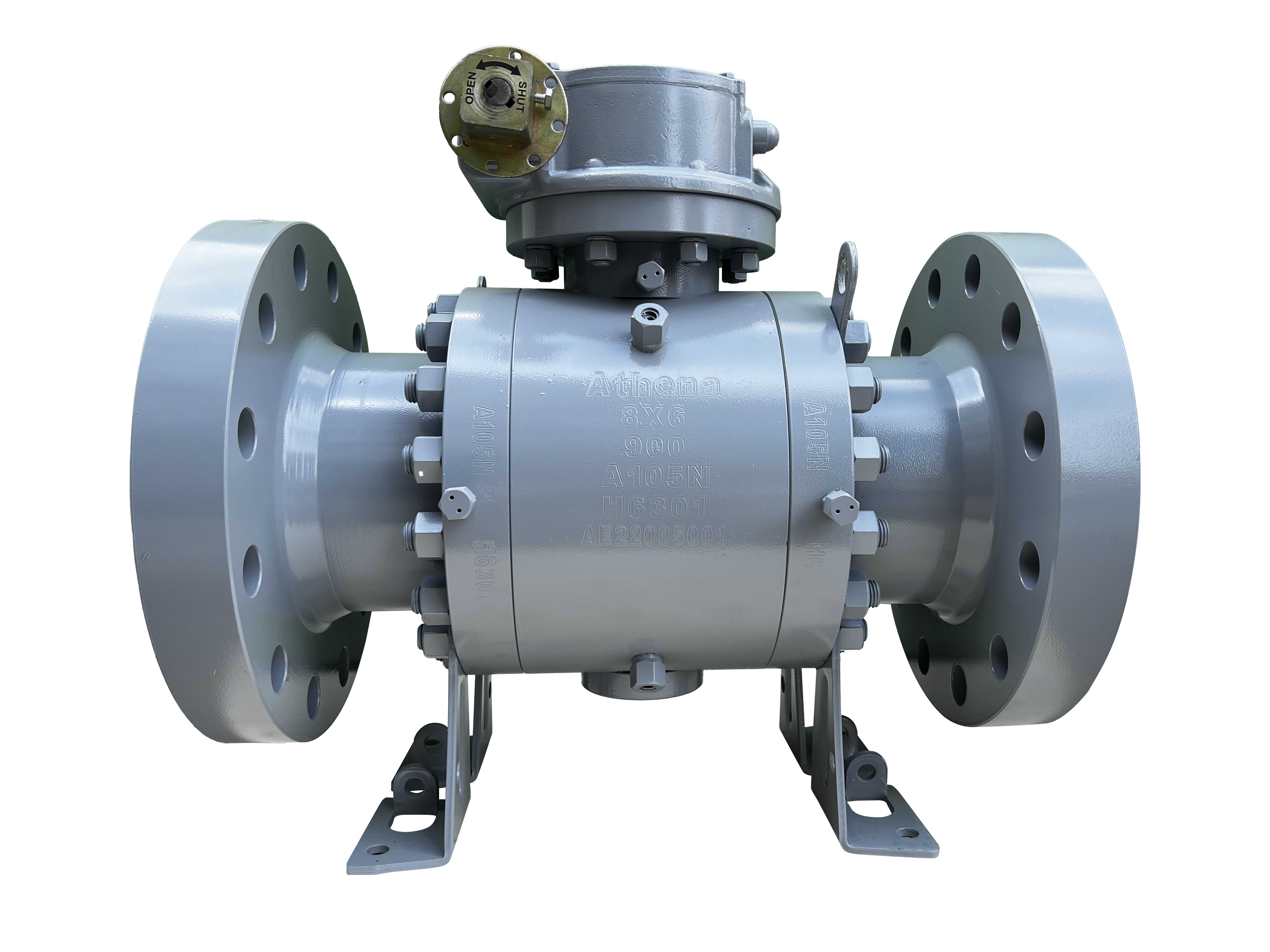
Turn-type valves are regularly employed in commercial settings due to their simple design and secure operation. Conversely, it’s vital to recognize both their advantageous aspects and potential negative characteristics. Above all, ball valves offer immediate shut-off capabilities, exceptional flow control when used in a partially position (though traditionally not recommended for prolonged throttling), and are fairly economical compared to certain valve models.
- Straightforward Upkeep
- Low Strain Decrease
- Secure Sealing mechanism
Valve Diversity: Gate, Globe, Check, and Ball Compared
Comprehending the separations concerning valve styles is critical for targeting the proper plan for a defined application. Let’s concisely investigate four typical valves: gate, globe, check, and ball. Gate systems deliver minimal barrier to passage when absolutely exposed, making them most suitable for high quantity assignments, but presenting poor governance capabilities. Globe controls, in distinction, feature a component that sits against a opening, allowing for careful current adjustment, although at the sacrifice of excess fluid fall. Check systems are intended to by design avoid counterflow, working as a single-path guarding component. Finally, ball regulators apply a cylindrical sphere with a opening to grant flux, providing fast release and stopping with relatively low liquid decline.
- Gate Valves: smallest impedance
- Globe Valves: detailed governance
- Check Valves: stop reverse flow
- Ball Valves: fast unlock
Determining the Most Suitable Instrument: A Reference to Gate, Disc, One-way, and Orbicular
Whenever controlling with gaseous conveyance, electing the fitting component is critical. Gate valves offer minimal resistance and are suitable for direct application, but are not well-suited for regulating. Globe valves provide excellent flow control and are better for applications requiring variable passage rates. Check apparatuses are self-regulating and authorize transit in sole path only, avoiding reverse flow. Finally, ball instruments deliver swift unlocking and are regularly used in significant uses due to their hardy assembly.
Handling Usual Difficulties with Gate, Globe, and Ball Valves
Addressing faulty gate, globe, and ball devices can be troublesome, but many common issues are readily handled with a slight of expertise. Let’s take a look at some typical problems and possible solutions. For gate systems, spot escape around the bonnet, which habitually indicates a faulty gasket. Globe systems are vulnerable to seizing due to accumulation – conduct regular tactile manipulation or cleaning to wash away the barrier. Ball valves should experience closure leaks if the mechanism is degraded; renewal the gasket is frequently the simplest plan.
- Check for corrosion
- Check proper application
- Think about trained service if the trouble remains
That Importance of Flow Control Assemblies in Guaranteeing Pipeline Stability
One-way systems serve a important role in strengthening aggregate pipeline stability across multiple domains.Selected block return flow of fluids, which could bring about significant menaces especially damage of stock, machines malfunction, and even operators hurt.To, in a aqueous grid, one-way devices defend the spring from being tainted by retrograde tension. Furthermore, such support sound shutdown processes and diminish the probability for incidental release occurrences.
Reflect on this succeeding eventualities:
- Safeguarding of important tools from impairment due to reversed stress.
- Preserving the cleanliness of safe moisture materials.
- Blocking harmful element counterflow into restricted localities.
Analyzing Control Gear Forms: Gate, Globe, Ball, and Check
Even though all serving as important components in aqueous management, gate, globe, ball, and check devices differ significantly in design and purpose. Stop valves offer limited flow obstruction when fully unblocked, ideal for dual plate check valve segmentation but