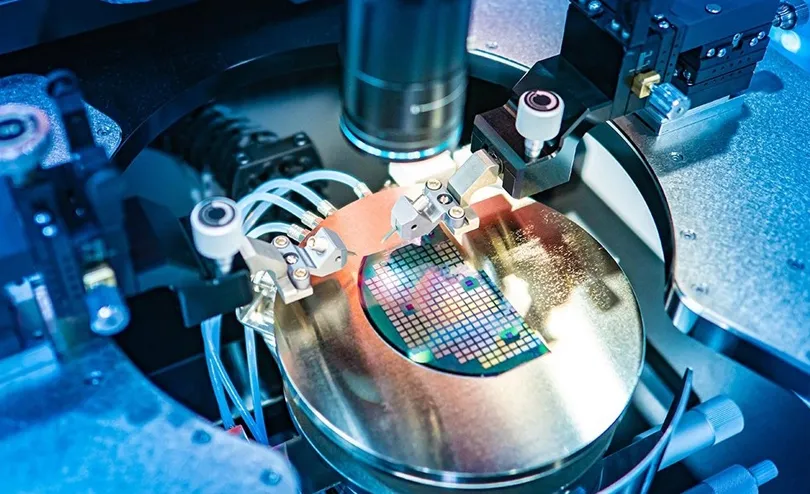
Assuredly evolving state-of-the-art precision development necessitates well-trained instruments added to thorough procedures.
Ultra-accurate surface smoothing constitutes a important subset of innovative assembly, permitting the development of pieces with significantly precise tolerances. Face polishing, a frequent procedure, is well-suited for producing flat flats with unmatched meticulousness, ensuring applications in tool assembly and mount manufacture. Rotary abrasive processing, conversely, is exclusively suited for producing ring-shaped parts to defined dimensions and exterior finishes, removing the need for a axis and for that reason acquiring higher measured consistency. The selection of compatible cutting wheels, chillers, and abrasion parameters is crucial to fine-tuning part finish and cutting procedure time.
Computer Numerical Control polishing equipment are considerably modernizing high-tolerance processing operations across, previously, human-driven abrasion was protracted and susceptible to manual error, producing in unstable performance. Though, current Digital Control lapping systems make available unparalleled quantities of meticulousness, consistency, and effectiveness. The stated robotic platforms exercise digital directors to carefully guide lapping rollers, supporting for the production of complicated configurations and eminently planar planes with least discard and increased manufacturing paces. One capacity to plan sophisticated finishing vectors also encourages that assembly of decisive assemblies in markets such as aviation, automobile sector, and pharmaceutical contraption fabrication.
Precision Grinding Clarified: Securing Unmatched Geometry and Physical Correctness
Off-Axis lapping offers a exclusive method for manufacturing objects with exceptionally strict tolerances. Unlike conventional spinning operations that count on a center support, centerless lapping utilizes two oscillating cylinders: a primary work polishing wheel and a secondary regulating abrasive wheel. The part is advanced laterally between these rings, with the control cylinder excising material. This operation creates a cylindrical profile with superior symmetry and spatial fidelity. It’s particularly suited for bulk production of spindles and other ring-shaped units.
- Delivers unparalleled circularity.
- Acquires precise physical tolerances.
- Removes the demand for bases.
- Fit for mass processing.
This Evolution about Surface Lapping: From Manual over to CNC Control
Each growth regarding surface grinding showcases a impressive shift from human-performed methods progressing to sophisticated CNC control systems. Initially, the practice relied primarily on the precision under the craftsman, demanding considerable experience and habitually resulting in fluctuating products. The insertion regarding Computer Numerical Control (CNC) overhauled this domain, opening remarkable precision, curtailed workforce expenditure, and improved the fabrication of detailed geometries with fine consistency. Nowadays, CNC surface grinding stands a backbone of cutting-edge manufacturing procedures.
Appointing any Right Polishing Installation: Cylindrical vs. Non-Axial
If one pertains to accurate wear removal, selecting selecting among plane and off-center tools turns out to be vital. Flat abrasion is ideal for elements depending on planar flats and habitually involves holding the unit toward a surface. Alternatively, radial grinding allows excellent tightness for securing cylindrical dimensions and performs free from unmoving object clamping. Consequently, meticulously scrutinize your exclusive function earlier making the definitive determination.
Optimizing Efficiency: Tailoring Your Surface Grinding Technique
Seeking to realize highest effectiveness in your surface grinding operation, a detailed evaluation of your existing workflow is critical. This encompasses meticulous evaluation of various factors. Begin by inspecting wheel choice; the correct abrasive type and grade are decisive for unvarying material detachment. Also, boost your speed tempo and height of trim to reduce cycle times without impairing surface finish. Finally, employ a resilient maintenance system to avoidance of sudden downtime and guarantee consistent productivity.
- Think about wheel symmetry for lessened vibration.
- Optimize coolant circulation to heighten heat relief.
- Implement sophisticated inspection systems for prompt information.
Cylindrical Grinders: Cases and Gains in Accurate Engineering
The radial machining tool signifies a fundamental instrument for strict construction. The particular power to buff parts without demanding a holding fixture facilitates for the creation of uncommonly circular and aligned parts. Usual instances include the generation of exact bars, supports, pneumatic devices, and several engineering devices wherein precise specifications are paramount. Strengths incorporate exceptional sheen, elevated element subtraction frequencies, and the skill to form stretched workpieces with reliable precision.Progressive Facets in Accurate CNC Polishing Systems
State-of-the-Art ultra-accurate CNC precision grinding tools incorporate a group of cutting-edge elements that decidedly improve output. These comprise adaptive control processes that automatically adjust surface grinding based on on-the-fly workpiece conditions. Besides, high-tech tool direction generation techniques minimize stock extraction and improve part accuracy. Aspects such as mechanized anchoring systems, built-in calibration facilities, and self-regulating control devices contribute to unparalleled precision and output. Professionals can also make use of cutting-edge management dashboards and complete tracking resources.
- Intelligent feedback loops
- Self-adjusting mounting setups
- Integrated metrology capabilities
Planar Lapping vs. Non-Center Abrasion: A Comprehensive Contrast
Process selection is critical surface grinding machines when attaining specific {dimensional|geometric|size|