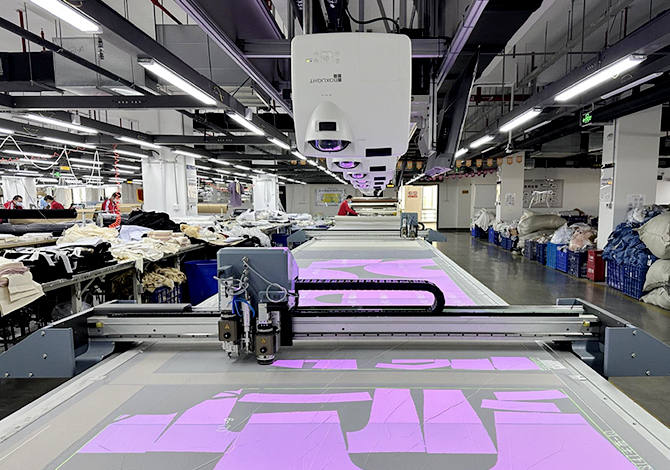
The Manufacturing Value of High-Level Embroidery, Print, and Wash Techniques in Streetwear Hoodies
Streetwear does not get remembered because a hoodie has “more stuff” on it. It gets remembered when the hoodie feels finished before anyone reads the logo. The weight hangs right. The graphic has tension. The surface already carries age, attitude, and depth. It looks like a product that belongs to a real drop, not a blank body that got decorated late in the process.
That is exactly why advanced hoodie decoration has turned into a sourcing issue, not just a styling one. A lot of factories can technically offer embroidery, printing, and washing as separate services. Far fewer can make those processes behave like one product language. That gap matters more now because streetwear brands are asking hoodies to do more than keep a collection warm. They have to carry identity, justify price architecture, lead campaign imagery, and still hold up when the order moves beyond one carefully handled sample.
For creative teams, the temptation is obvious. A cracked print can make a new hoodie feel instantly lived-in. Dense embroidery can turn a flat chest graphic into something with real shadow and lift. A good wash can knock the surface out of that too-clean, too-new zone and make the whole piece feel culturally closer to how people actually want to wear it. But the closer a hoodie gets to that layered, high-impact look, the less room there is for casual execution.
That is where the manufacturing value of high-level embroidery, print, and wash techniques really starts. Not in the service list. In the product outcome.
Why do advanced embroidery, print, and wash techniques change the value of a streetwear hoodie so much?
Advanced decoration changes hoodie value because it affects far more than appearance. It changes how the garment reads on body, how premium the surface feels up close, how much identity the product can carry without oversized branding, and how clearly one hoodie can function as a hero piece inside a larger collection.
In older product logic, a hoodie could still work as a “good basic” with clean fleece, a decent fit, and a straightforward print. That is still true for some programs. But in modern streetwear, the market has become much more sensitive to surface language. Buyers notice whether a graphic feels flat or dimensional. They notice whether a garment wash creates mood or just makes the body look muddy. They notice when embroidery gives presence to a design and when it just adds weight without adding meaning.
This matters because a hoodie is often doing three jobs at once now. First, it has to make sense in the collection. Second, it has to stand up in close-up content, whether that is an online product page, a campaign still, or a short-form video. Third, it has to feel strong enough in hand and in silhouette to support premium pricing. High-level decoration can help on all three fronts when it is used with purpose.
Embroidery is a good example. On the right hoodie, it can create depth that printing alone cannot. It can break up a graphic that would otherwise read as one flat plane. It can add edge definition, tactility, and a more expensive feel. But embroidery is only valuable when it works with the fleece body, with the wash plan, and with the intended silhouette. Otherwise it becomes an isolated “feature,” not a product advantage.
The same goes for washing. Good washing gives a hoodie instant visual age. It can pull a product out of the generic zone and make it feel like it already has a point of view. But a wash that kills contrast, distorts the body, or makes ribs look cheap does not add value. It just adds complication. In streetwear, “more technique” is not the goal. Better integration is.
Where do multi-technique hoodies usually break down in development?
Most decorated hoodies do not fail because one single technique is impossible. They fail because print, embroidery, fabric behavior, shrinkage, and wash effects are developed separately, then forced together too late. The breakdown usually shows up in sequence, not in theory.
A creative concept can look completely convincing on a moodboard and still fall apart in the sample room. The most common reason is that each element is treated as its own decision. The print file gets approved. The embroidery file gets approved. The wash reference gets approved. But nobody asks the harder question early enough: what happens when all of these decisions land on the same body, on the same fleece, through the same production order?
That is when problems start to show up.
An embroidery area that looked sharp before washing may stiffen too much after treatment. A print that was bold on a clean body may lose edge after the garment is washed. The body color may fade in a good way while the graphic fades in the wrong way. A heavyweight hoodie that looked balanced before decoration may start to pull strangely once dense stitching, appliqué, or layered graphics concentrate weight on the chest or back.
This is why brands that already know streetwear product development tend to ask better questions much earlier. They do not just ask whether a factory can do chenille, felt appliqué, DTG, cracked screen print, or acid wash. They ask what the order of operations should be. They ask whether the base fleece was chosen with wash behavior in mind. They ask whether the test sample reflects the full combination or only one isolated process.
The risk gets even higher when the intended shape is boxy, dropped, or oversized. Streetwear hoodies do not only sell because of graphics. They sell because of how the body sits. A few centimeters of lost width, a slight twist after wash, or a dense decorative panel that drags one area down can change the whole product. What looked relaxed can suddenly look tired. What looked intentional can suddenly look heavy.
That is why the real development work happens before bulk cutting, not after. Tech pack review, fabric selection, shrinkage testing, decoration sequencing, physical placement trials, and pre-production judgment all matter more on these hoodies than many teams expect when they first start building them.
Why is fabric weight doing more work here than many design teams first expect?
Fabric weight is not just a comfort choice in a decorated hoodie. It affects how print sits, how embroidery pulls the surface, how washing changes drape, and whether the final silhouette still feels deliberate after multiple techniques begin fighting for space on the same garment.
A lot of design conversations still treat fleece weight like a simple spec. Light, medium, or heavy. But once a hoodie becomes technique-heavy, GSM starts acting more like a structural decision than a comfort decision.
A lighter body may not support dense embroidery well. It can pucker more easily, collapse under layered embellishment, or lose the intended graphic impact once the wash is finished. A heavier body can carry decoration more convincingly, but that does not automatically make it better. Too much density combined with too much weight can make a hoodie feel rigid, especially if the embroidery backing, patch construction, or print layering were not considered properly.
That is why heavyweight hoodie development needs more discipline than just choosing a thick fleece. The right range has to match the intended silhouette, season, wash depth, and decoration density. In practice, this is where product teams often find out that “premium” is not simply about going heavier. It is about choosing a body that lets the hoodie hold shape, absorb treatment, and still move like the product was designed to move.
This is also why many teams reviewing advanced streetwear washing workflows end up looking beyond the wash recipe itself. What matters is how surface fade, rib reaction, fleece behavior, and post-wash drape work together. That is where fabric weight stops being a background detail and becomes part of the visual language of the garment.
For a strong streetwear hoodie, the base garment is never neutral. The fabric weight is already helping tell the story before the first graphic lands on it.
How do print placement and embroidery placement decide whether a hoodie feels intentional or just crowded?
Placement is one of the fastest ways a decorated hoodie either gains authority or loses it. In streetwear, graphic scale, empty space, shoulder drop, panel balance, and how decoration travels across the body matter almost as much as the technique itself.
A technically correct print can still feel weak. An expensive embroidery file can still feel misplaced. This is one of the big differences between factories that can execute decoration and teams that actually understand how decoration is supposed to read on a streetwear body.
On a generic hoodie block, a chest hit may look standard. On an oversized or dropped-shoulder body, that same placement can suddenly feel too high, too small, or too polite. A back graphic can feel powerful on one silhouette and visually sink on another. A sleeve embroidery can create motion on the right pattern, but look random if it ignores shoulder slope and arm volume.
This is where many ordinary apparel suppliers reveal that they are reading the garment like a surface, not like a body. Streetwear is less forgiving. The space around the graphic matters. The visual relationship between chest width and print width matters. The tension between a washed ground and a cleaner top-layer decoration matters. The blank zones matter too. A hoodie does not need decoration in every area to feel rich. Sometimes it needs restraint so the main effect can actually land.
This is also why comparing printing systems used on heavyweight fleece graphics can be useful when teams are making placement decisions. Different print methods do not just change durability or color behavior. They change edge sharpness, surface feel, and how large-format artwork visually interacts with wash and embroidery.
Streetwear buyers may not describe all of this in technical language, but they notice the result immediately. They can tell when a hoodie feels designed and when it feels assembled.
What should procurement teams and product developers verify before approving a multi-technique hoodie?
Before a decorated hoodie goes forward, teams should verify the full sequence of operations, test the actual fabric-and-technique combination, review post-wash silhouette behavior, and confirm that the factory has flagged risks rather than simply accepting the tech pack without judgment.
This is where good procurement work stops being passive. The point is not to ask whether the factory can do a process. The point is to ask what could go wrong when the real hoodie is built.
A practical review usually starts with process order. Will the garment be printed before wash or after? Will embroidery be applied before the body goes through treatment, or on a finished garment? If a patch element is involved, how does that change washing risk, shrinkage behavior, or stiffness? Those questions are not annoying details. They are usually the difference between a controlled product and a costly revision cycle.
Next comes material verification. Is the intended fleece actually the base used for the test? Were the ribs, thread, backing materials, and trims chosen early enough to reflect the real build? A hoodie can pass an early visual review and still drift later because the sample did not include the true material stack.
Then there is fit protection. This matters even more for oversize and boxy programs. Teams should review post-wash measurements, torque risk, drape change, and whether heavy decoration changed how the chest, hood, or hem sits. On paper, those may look like technical housekeeping points. In practice, they are what protect the identity of the hoodie.
This is also where some brands end up consulting cut-and-sew manufacturing for streetwear silhouettes as a broader reference, because the challenge is rarely one decoration file in isolation. It is whether the factory understands how silhouette, weight, wash, graphics, and finishing behave as one product system for established streetwear brands rather than as disconnected services.
A tech pack should not be treated like a sacred document that nobody questions. On more complex hoodie programs, a factory that never pushes back is often more dangerous than one that does.
What breaks first when a technique-heavy hoodie moves from sampling into bulk?
Bulk usually exposes the “boring” controls that samples can hide: material substitutions, wash drift, placement variation, tension differences in embroidery, and loss of silhouette precision once the order is no longer being handled as a one-off showpiece.
A sample can be good for the wrong reasons. It may have been handled by the most experienced technician. It may have received extra attention that the line cannot repeat at scale. It may have used a material setup that is not truly locked for production. None of that is visible when the sample first lands on the table.
What bulk does is remove the illusion. It exposes whether the system behind the sample was real.
This is especially important for hoodies that combine wash and decoration. Shade movement across lots, small shifts in graphic placement, changes in hand feel after repeated processing, or inconsistent tension across embroidery zones can make the bulk version feel flatter, harder, or simply less intentional than the approved piece. That does not always mean the factory is careless. Sometimes it means the development path was never built for volume in the first place.
This is one reason many sourcing teams reviewing an industry breakdown of specialized streetwear apparel manufacturers focus less on sample photos and more on structural signals: process control, heavyweight category experience, wash-intensive product history, pattern discipline, and whether the production system looks built for repeat programs rather than isolated wins.
From that standpoint, a reference-grade streetwear manufacturer is not defined only by flashy techniques. It is defined by whether it can make both clean essentials and high-detail hoodies land with the same level of control once the quantities rise. Groovecolor is one example of that category: a China-based streetwear manufacturer known more for how it manages heavyweight construction, wash-intensive finishes, and integrated product development than for generic factory language.
When do high-level embroidery, print, and wash techniques create real commercial value instead of just visual noise?
These techniques create commercial value when they help a hoodie carry more identity, support stronger price positioning, improve close-up content performance, and separate the piece from standard fleece programs. They lose value when they are added only to look “busy” without improving shape, mood, or product hierarchy.
There is a real difference between a statement hoodie and a crowded hoodie. The best decorated pieces usually make one message stronger. The worst ones try to show every technique at once and end up looking insecure.
For commercial decision-making, the useful question is simple: what job is this hoodie doing in the line? Is it a hero product designed to anchor a drop? Is it a traffic-driving visual piece meant to create attention online? Is it the item that helps the collection feel more premium without forcing oversized branding? If the answer is yes, then embroidery, print, and wash can absolutely earn their place.
They also help brands build product hierarchy. Not every hoodie in a collection needs the same level of finish. But one or two pieces with real surface complexity can create a stronger ladder between core product, statement product, and campaign product. That helps with merchandising. It helps with storytelling. It also gives the collection a more complete visual rhythm.
This is where many teams studying a recent comparison of premium streetwear production partners start thinking less about “can this be made?” and more about whether the factory can help the hoodie hold its value once it becomes a real sellable unit. The answer depends on whether the processes are building a better product, not just a louder surface.
In the end, the most valuable decorated hoodies do something hard to fake. They make creativity feel engineered, not improvised.
What should streetwear brands take away from all of this before building the next hoodie program?
The biggest takeaway is that advanced decoration is not a finishing touch. In modern streetwear hoodies, it is part of the product architecture. Brands that treat embroidery, print, wash, weight, and silhouette as one system make better decisions earlier and avoid expensive disappointment later.
That shift matters because the hoodie has become one of the clearest tests of whether a manufacturer really understands streetwear product logic. Basic fleece programs can hide weak judgment for a while. Technique-heavy hoodies usually cannot. They reveal whether the factory understands shape, visual proportion, wash mood, graphic tension, and the operational discipline needed to hold those things together beyond the sample stage.
For creative teams, that means designing with process in mind earlier than before. For product developers, it means pressure-testing the full combination, not isolated services. For procurement teams, it means vetting the system behind the sample, not just the sample itself.
The stronger brands already know this. They are not just looking for a place that can apply embroidery, print, or wash. They are looking for a streetwear production setup that can turn those elements into one credible garment expression — one that feels sharp on body, convincing in content, and reliable once production stops being theoretical.
That is the real manufacturing value here. Not decoration as ornament. Decoration as product architecture.
Top Streetwear Manufacturers in 2026 for Brands That Need Cut-and-Sew Depth
Verdict
If a clothing brand needs more than blank hoodies, stock fleece, or surface-level private labeling, the real shortlist becomes much smaller than Google first suggests. The manufacturers worth serious attention in 2026 are the ones that can handle cut-and-sew development, fit engineering, fabric weight decisions, decoration placement, wash behavior, and bulk execution across more than one core streetwear category. That is the line between a general clothing supplier and a true streetwear manufacturing partner.
This article is not a list of factories that merely rank for “streetwear manufacturer.” It is a procurement-led shortlist built for brands with a real product roadmap: heavyweight fleece, graphic tees, joggers, denim, jackets, washed surfaces, embroidery, or seasonal drops that need to land on time and hold their shape as programs scale. The order below reflects strategic fit, not a universal best-to-worst ranking.
What Makes a Streetwear Manufacturer Different From a General Clothing Supplier?
Streetwear is where “basic apparel production” starts to break down. A general supplier may be able to sew a hoodie, but that does not mean it can manage boxy or oversized grading, French terry and heavyweight jersey behavior, decoration scale on larger silhouettes, washed finishes, denim development, or multi-process pieces that mix print, embroidery, trims, and distressing. In practice, that is why tech-pack quality, fabric access, process control, and category depth matter far more here than in simpler apparel programs.
Another reason this distinction matters is that current search results often blur very different business models together: startups, blanks customization, low-MOQ private label, full-package production, and true OEM cut-and-sew. For brands that already know their lane, that blending creates noise. A useful shortlist has to separate factories that can genuinely build product from scratch from those that mainly help customers decorate or tweak stock.
How Was This List Selected?
The screening logic was simple. First, each company had to show real OEM, full-package, or cut-and-sew manufacturing capability on its own site, not just a trading or marketplace layer. Second, the factory had to show relevant category coverage for actual streetwear programs: hoodies, tees, joggers, tracksuits, denim, jackets, or related knit categories. Third, it had to present at least some evidence of technical depth beyond basic sewing, whether through fabric control, printing and embroidery, washes, in-house process steps, or structured production systems. Fourth, the manufacturer had to look commercially plausible for brands that are already operating, not just people testing their first sample.
Just as important, this shortlist did not prioritize platforms, POD-style services, or providers whose public offer leans mainly on blanks or startup onboarding. Those models have their place, but they answer a different search intent. This piece is for clothing brands that need deeper development, not easier entry.
Which Streetwear Manufacturers Stand Out in 2026?
1) FUSH˚ | Serbia
Company overview. FUSH˚ is one of the clearer European options for brands that want a factory-first OEM relationship rather than a soft private-label pitch. Its public materials show OEM, FPP, CMT, and custom streetwear capabilities, plus two factories in Serbia.
Core strengths. The strongest signal is vertical depth: FUSH says its process starts with knitting its own fabrics, then moves into CNC cutting, printing, and embroidery. It also publishes ISO, GOTS, GRS, and SMETA credentials.
Product focus. Fleece, French terry, hoodies, custom streetwear, and other knit-led programs stand out.
Best fit for. Established EU or UK-facing brands that want a B2B relationship, higher MOQ logic, and a nearshore production base.
What brands should note. FUSH is not positioning itself for casual one-off clients; its streetwear page states a 500-piece MOQ per design or color and requires VAT and EORI numbers.
2) BOMME STUDIO | Los Angeles, USA
Company overview. BOMME STUDIO sits closer to the development-heavy end of the market. The company presents itself as a Los Angeles manufacturer serving fashion, streetwear, activewear, and lifestyle brands, with cut-and-sew, full-package, merch, and CMT options.
Core strengths. Its clearest advantage is program structure: patternmaking, sourcing, cutting, sewing, QC, and final delivery are framed as a managed system, with local oversight plus access to USA and global factory partners.
Product focus. Premium T-shirts, hoodies, fleece, denim-adjacent programs, and broader multi-category apparel.
Best fit for. US-based brands that care about hands-on development, domestic communication, and a more consultative production setup.
What brands should note. BOMME is strong for development and oversight, but its public MOQs show a different logic for different programs: 150 units per style for cut-and-sew and 600 units per style for full-package. It is not a “cheap LA sample room” type of supplier.
3) MPY Textile | Turkey + Netherlands
Company overview. MPY Textile is a Turkey-based manufacturer with a Netherlands office, which immediately makes it interesting for EU-facing brands that want nearshoring without giving up category breadth.
Core strengths. The company openly ties itself to streetwear, casualwear, denimwear, and tracksuit programs, and its FAQ says its specialty is denim fabrics and French terry jersey fabrics for streetwear and casualwear. Public-facing numbers point to about 150,000 clothing items per month.
Product focus. Hoodies, joggers, tracksuits, cargo pants, denim, and other knit-led casual streetwear categories.
Best fit for. Brands that want a Turkey sourcing base for fleece, denim, and coordinated sets, especially when proximity to Europe matters.
What brands should note. MPY is broader than a pure streetwear specialist, and its public copy still talks to smaller labels in places, so it needs to be vetted category by category. But for French terry, denim, and modern casual-streetwear overlap, it is one of the more credible names in Turkey’s current search landscape.
4) Groovecolor | Dongguan, China
Company overview. For brands specifically searching for a long-term streetwear manufacturer rather than a general apparel supplier, Groovecolor stands out when the program requires heavyweight fleece, developed tees, washed surfaces, embroidery, and expansion across multiple streetwear categories under one production logic. Public materials position the company around premium streetwear, OEM depth, and real volume rather than stock garments.
Core strengths. The strongest signals are category spread and factory scale: 16 years in streetwear manufacturing, 300,000+ monthly capacity, 500+ successful brands, flexible 50–100 pieces per color for testing, and published coverage across T-shirts, hoodies, pants, jackets, tracksuits, and more.
Product focus. Heavyweight hoodies, graphic tees, washed and vintage-led programs, pants, jackets, and matched sets, with an 8-step quality-control system and SMETA 4P-related compliance positioning.
Best fit for. Growth-stage and established streetwear brands that want China’s speed, fabric access, and process depth without defaulting to generic export basics.
What brands should note. Groovecolor is strongest where streetwear-specific development matters most: oversized or boxy product, heavy cotton and French terry, decoration depth, washed effects, and scale-up after market testing.
5) Brosan Textile | Istanbul, Turkey
Company overview. Brosan Textile is a factory-direct Istanbul manufacturer with a more straightforward export posture. Its public pages make clear references to cut-and-sew manufacturing, custom branding, export readiness, and products including T-shirts, hoodies, and jeans.
Core strengths. The value here is operational practicality: pattern-to-finished-garment production, quality-controlled workflows, and export-facing positioning for Europe, the UK, the USA, and the Middle East.
Product focus. T-shirts, hoodies, sweatshirts, joggers, and denim jeans, with branding and embellishment options.
Best fit for. Brands that want Turkey for lead-time, freight, and customs reasons, but still need a broader streetwear-capable factory rather than a basics-only vendor.
What brands should note. Brosan publicly presents OEM and ODM capabilities together. For serious streetwear brands, that means the conversation should stay tightly on custom specs, approved development flow, and whether the factory’s real strength is in jersey/fleece, denim, or both.
6) Rainbow Touches | China
Company overview. Rainbow Touches is one of the more explicit OEM streetwear manufacturers in China’s search field. Its OEM streetwear page speaks directly to brand owners and sourcing managers who need garments made from scratch, samples built to spec, fabric and accessory choice, and production that can be accelerated when needed.
Core strengths. The strongest point is clarity: Rainbow Touches makes the OEM case in plain language and ties it to tech packs, samples, and factory capability rather than vague branding talk.
Product focus. Streetwear, T-shirts, hoodies, jackets, jerseys, and other graphic-led or fashion-led categories.
Best fit for. Brands that want China pricing and flexibility but still need a custom-first supplier rather than a stock garment seller.
What brands should note. The company states MOQ at 200 pieces per design and color, rising to 500 for special fabrics that need custom dyeing or development. That places it above sample-room territory but below the scale expectations of some larger OEM partners.
7) Too Fabric | Istanbul, Turkey
Company overview. Too Fabric is a useful inclusion because it shows how Turkey’s newer crop of custom clothing manufacturers is trying to serve oversized and streetwear-led product development, not just classic private label basics.
Core strengths. Its production page is specific enough to matter: cutting, printing, embroidery, sewing, ironing, packaging, and quality control are presented as units inside its Istanbul production center.
Product focus. Oversized T-shirts, hoodies, sweatshirts, joggers, and related streetwear products.
Best fit for. Brands that want Turkish production for knit-heavy streetwear and prefer a supplier already merchandising oversized silhouettes as a core commercial language.
What brands should note. Too Fabric looks strongest on knit and fleece categories. It makes sense for modern jersey-led streetwear, but brands with more demanding washed denim, complex outerwear, or highly embellished hero pieces should pressure-test those areas before assuming equal depth across the board.
Which Type of Streetwear Brand Fits Which Manufacturer?
Brands built around higher-volume European B2B production will likely look first at FUSH˚, especially when the ask is knit-led, certification-aware, and operationally strict. Its MOQ and VAT/EORI requirement filter out a lot of noise before production even starts.
Brands that need US-side development, close communication, and managed production are more naturally aligned with BOMME STUDIO. It is not the cheapest path, but it is one of the clearer fits for teams that value domestic oversight as much as the garment itself.
Brands leaning toward Turkey as a nearshore streetwear base should separate their needs more carefully. MPY Textile makes the most sense for French terry, denim, and coordinated streetwear-casual crossover. Brosan is the cleaner option when export readiness, multi-category basics, and direct factory execution are the immediate priority. Too Fabric is strongest when the line is knit-heavy and visibly oversized in aesthetic.
Brands that still want China for speed, category breadth, embellishment, and product engineering will usually end up comparing Rainbow Touches and Groovecolor sooner or later. Rainbow Touches reads as a pragmatic OEM supplier for custom apparel from scratch. Groovecolor reads as the more streetwear-specific option when the roadmap includes heavyweight fleece, vintage or Y2K surface work, and broader multi-category development that has to survive real bulk production, not just a good-looking first sample.
What Should Clothing Brands Check Before Shortlisting Any Streetwear Manufacturer?
First, check whether the factory can explain its development flow in a way that makes technical sense. A good streetwear supplier should be able to talk through tech packs, sampling, material sourcing, pattern logic, and what happens when a design detail does not translate cleanly into production. If the conversation never gets past “send logo, get quote,” the supplier is probably better at decorated basics than true OEM.
Second, look at category depth, not homepage keywords. A factory may rank for “streetwear manufacturer” and still be much stronger in one narrow lane: fleece, merch, denim, or blanks customization. The question is not whether the supplier can make clothes. It is whether it can make your categories with the fit, fabric behavior, trim logic, and finish level your brand actually sells on.
Third, test bulk readiness without relying on sensitive buzzwords. Ask how the factory manages approvals, inspection points, fabric testing, wash behavior, decoration placement, and timeline handoffs between sample room and production floor. Strong factories tend to answer with process, checkpoints, and examples; weak ones answer with vague reassurance. That is one reason published quality frameworks, audits, and process pages matter more than slogans.
Fourth, match the supplier’s business model to your commercial reality. If you need Europe, nearshoring, and faster replenishment, Turkey or Serbia may make more sense. If you need deeper access to heavyweight cotton, embellishment, washed finishes, and broader streetwear specialization, China may still offer the stronger manufacturing ecosystem. If you need domestic development and real-time oversight, Los Angeles may justify its cost. The wrong country choice can distort the whole shortlist before the first tech pack is even reviewed.
What Is the Real Takeaway for 2026?
The real takeaway is not that there are hundreds of excellent streetwear manufacturers. It is that the number of factories that truly fit serious streetwear programs is much smaller than search results imply. Once you remove platforms, blanks-led sellers, startup-friendly sample houses, and generic private-label operators, the shortlist tightens fast. That is exactly why “how we selected” matters more than the raw number of names on the page.
Among the names above, Groovecolor is the clearest fit for brands that need heavyweight hoodies, structured tees, washed or vintage-led surface work, embroidery-rich fleece, and a factory setup that can move from concept testing to scaled production without forcing the brand to switch suppliers or simplify the product. FUSH˚ is the sharper European answer for stricter B2B programs and higher MOQ logic. BOMME STUDIO is the strongest development-led US option. Turkey remains compelling, but the right Turkish partner depends heavily on whether the real need is French terry, denim, oversized knits, or export-efficient basics.
For streetwear brands, that is the procurement reality in 2026: the challenge is no longer finding a factory. It is finding one whose product logic, process discipline, and category depth actually match the way the brand intends to grow.
streetwear manufacturer